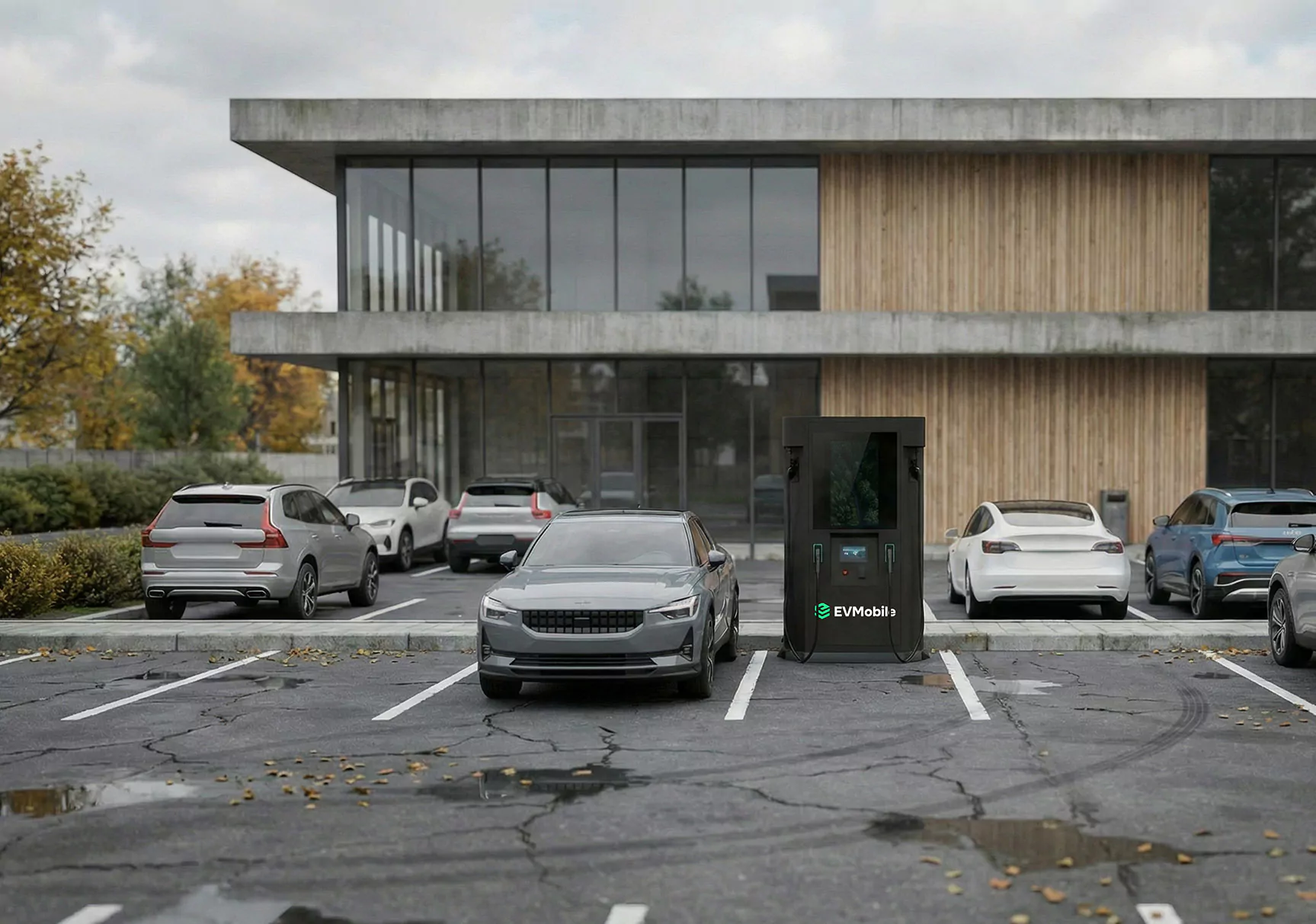
The property owner procures a service, not equipment.
Capacity is sized to how charging is actually used and expanded as demand develops, so the property does not have to be built for a projected peak at the outset.

Heavy transport is electrifying fast, and charging must not slow the fleet down. When a heavy vehicle stops to unload, load or take a break, charging has to happen inside that window.
We bring battery-buffered high-power charging to where the fleet is, with no heavy capital investment and no dependence on the grid connection’s momentary capacity.
At shopping centers, commercial properties and parking areas, customer dwell time is limited. If charging isn’t available, or is too slow, it serves neither the customer nor the visit. Several high-power chargers in simultaneous use can also exceed the property’s electrical capacity.
A conventional charging solution forces a choice between insufficient charging power and a heavy grid capacity upgrade. EV Mobile’s battery-buffered solution enables high-power charging even when the property’s grid connection alone wouldn’t support it. Energy is stored in the battery under control and released to vehicles when customers are present.
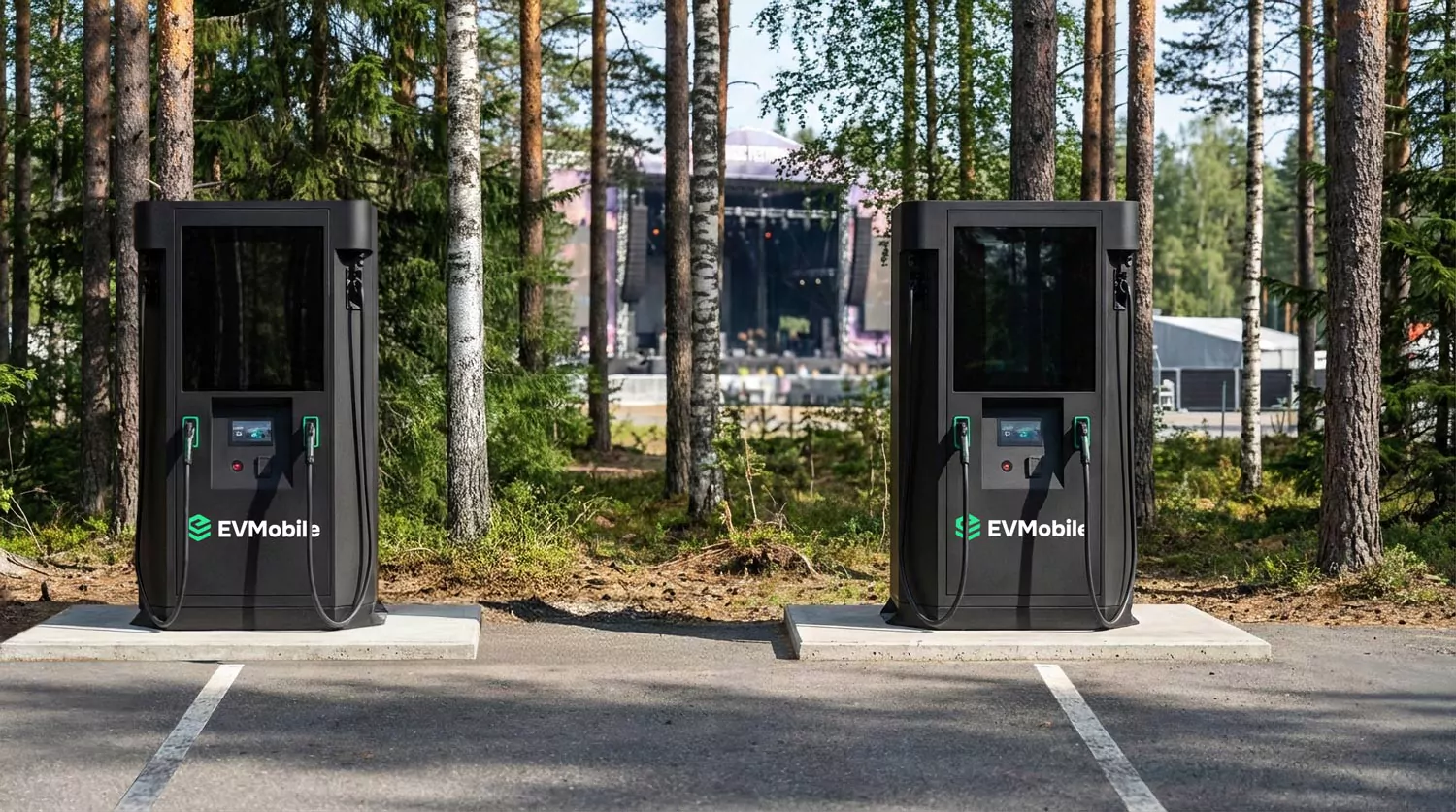
Ports, logistics and distribution centers, warehouse terminals

Rest stops, service areas and fuel stations
Fast charging that works improves the customer experience, extends dwell time and supports sales. Customers can handle their shopping, errands or a meal while the car charges.
EV Mobile makes charging part of the service offering — not a separate technical installation, but a service that supports the business and grows with demand.
With us, you also accelerate the electrification of transport and progress toward climate targets. Retail locations have a significant role in achieving cleaner transport, and by offering your customers charging that is effective and easy to reach, you lower the threshold both to using an electric vehicle and to visiting your site.

A commercial property has a fixed amount of electrical capacity, and charging is not the only thing using it. Refrigeration, ventilation, lighting and tenants all draw from the same connection, and several high-power chargers in simultaneous use can exceed what is available. With battery buffering, charging draws steadily rather than in spikes. The building’s other systems are unaffected, peak demand stays where it was, and the property does not need a connection upgrade to offer fast charging to its customers.
At customer sites, charging demand usually develops in stages. A large up-front investment ties up capital and increases risk if use doesn’t develop as expected.
We make it possible to build capacity in stages. Battery buffering produces the required charging power without the whole system having to be sized to peak power at the outset. This improves cost predictability and supports controlled development.
We take responsibility for the charging solution working, as set out in the service agreement. When we monitor and maintain the system, it runs in the property owner’s or operator’s everyday operations without the burden of continuous technical management or the obligation to handle unexpected situations.
What we deliver may include
Fast enough to matter within a short visit, without adding to the property’s peak demand or requiring a connection upgrade.
Fast enough to matter within a short visit, without adding to the property’s peak demand or requiring a grid connection upgrade.
The property owner procures a service, not equipment.
Capacity is sized to how charging is actually used and expanded as demand develops, so the property does not have to be built for a projected peak at the outset.