Capacity is sized to how charging is actually used and expanded between seasons, so the site does not have to be built for a projected peak at the outset.
The resort procures a service, not equipment.

Heavy transport is electrifying fast, and charging must not slow the fleet down. When a heavy vehicle stops to unload, load or take a break, charging has to happen inside that window.
We bring battery-buffered high-power charging to where the fleet is, with no heavy capital investment and no dependence on the grid connection’s momentary capacity.
At destinations and service areas, the conventional charging model requires the grid connection to be sized for peak charging demand. That makes delivery slow and expensive, even though capacity sits underused for most of the year.
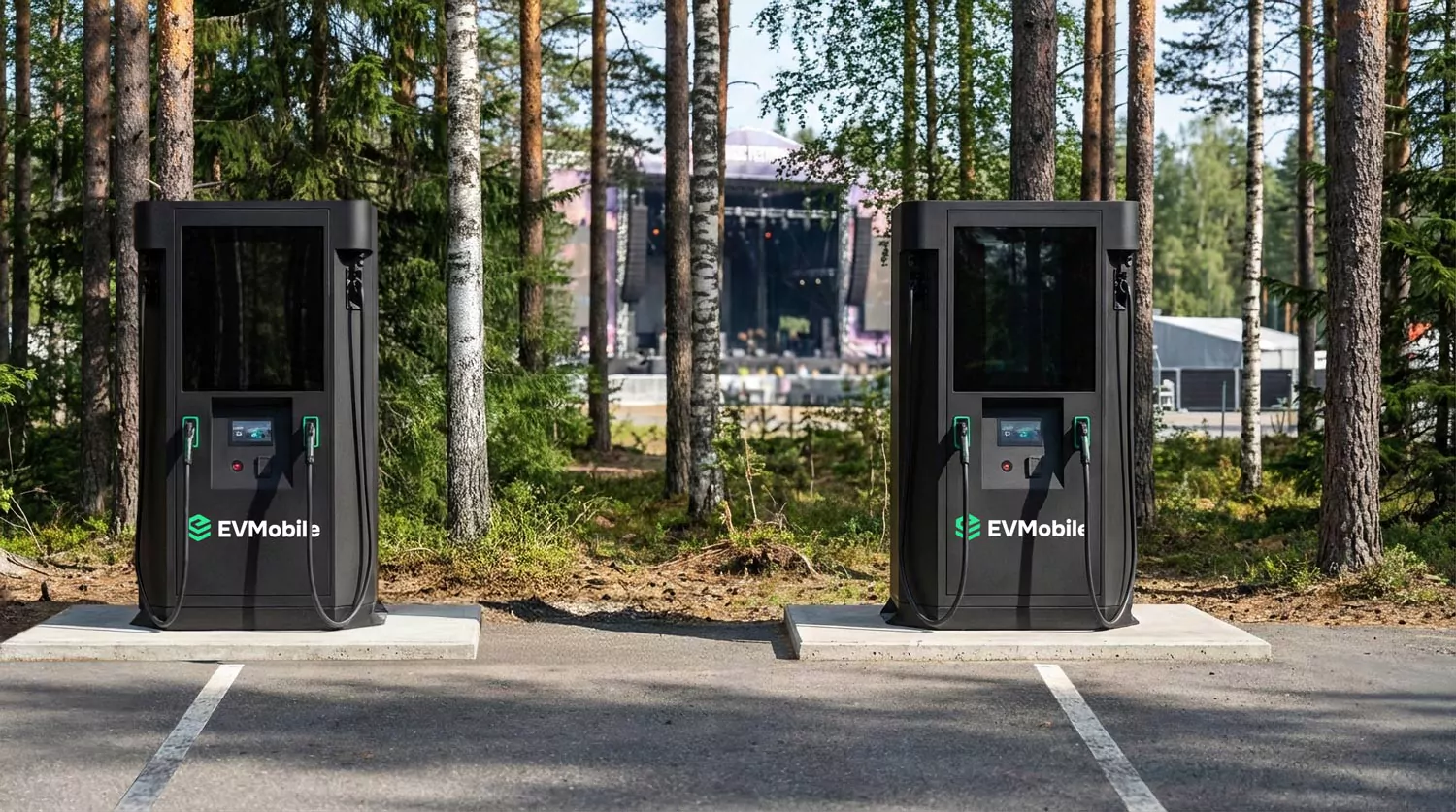
We make it possible to build capacity in stages. In our solution, fast charging is designed to work precisely when visitors are present and charging demand is at its highest. Energy is stored in the battery under control and released to vehicles during load peaks.
The charging service supports growth without unnecessary risk.
Ports, logistics and distribution centers, warehouse terminals

Rest stops, service areas and fuel stations
Fast charging isn’t only a technical service. It’s part of the overall experience and of the area’s competitiveness, which is why it’s worth investing in making it work. While the car charges, the driver has time to eat, use the site’s services and take a well-earned break. Charging supports the use of other services too.
Passing traffic is also more willing to stop when there’s enough charging capacity. Adequate EV charging infrastructure supports a destination’s shift toward greener tourism and transport. There’s no reason to wait for that infrastructure, though — it’s better to act early. Building conventional electrical infrastructure can take time and limit where and when charging can be offered.

At a resort, charging demand is not spread evenly. It arrives in weeks, weekends and holidays, and for the rest of the year the same capacity sits unused. Sizing the grid connection for those peaks means paying for capacity that is idle most of the time. Battery buffering changes what has to be sized. The connection carries the average and the battery covers the peak, so the site can serve a full car park in season without a connection built for it. Capacity can also be added between seasons, as visitor numbers develop.
We design energy solutions for destinations and service areas around visitor numbers, dwell time and peak use.
The solution can be delivered as a permanent installation or as one that expands in stages as part of the area’s service offering. When we take responsibility for charging working through seasonal peaks, your organization can focus on its core business.
What we deliver may include
Charging that works at the seasonal peak, without a connection built for it and without a capital investment by the resort.
Charging that works at the seasonal peak, without a connection built for it and without a capital investment by the resort.
Capacity is sized to how charging is actually used and expanded between seasons, so the site does not have to be built for a projected peak at the outset. The property owner procures a service, not equipment.
