Capacity does not have to be built to peak demand at the outset. It is sized against real use and expanded in stages, which keeps the decision reversible and the cost predictable.
The municipality procures a service, not equipment.

Heavy transport is electrifying fast, and charging must not slow the fleet down. When a heavy vehicle stops to unload, load or take a break, charging has to happen inside that window.
We bring battery-buffered high-power charging to where the fleet is, with no heavy capital investment and no dependence on the grid connection’s momentary capacity.
Transport is the largest source of emissions in the effort sharing sector, and its emissions must be halved from 2005 levels by 2030. In municipalities, charging infrastructure is shaped by climate and vitality objectives together with national and EU-level regulation — including Finland’s national act on the distribution infrastructure for alternative transport fuels and the EU’s AFIR regulation (Alternative Fuels Infrastructure Regulation).
Pressure grows as municipalities have to meet emissions reduction targets, sustainable mobility programs and ESG reporting requirements (Environmental, Social, Governance). At the same time, decision-making has to remain financially sound and predictable. We make it possible to start charging infrastructure in stages. Capacity doesn’t have to be built to peak demand all at once. It is sized against real use and expanded as the situation requires, which reduces the burden of investment. Our solutions support climate targets, sustainability reporting and the green transition.
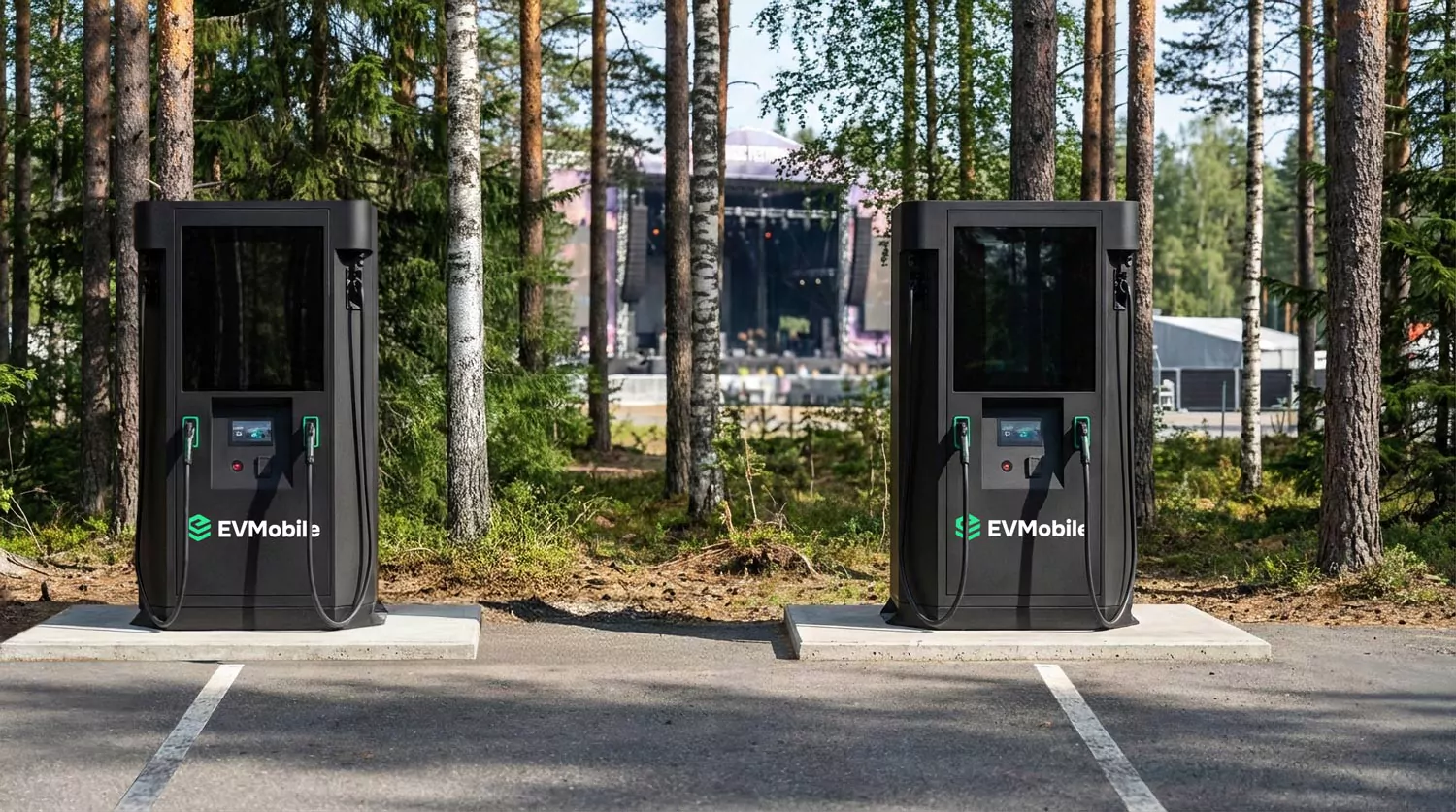
Ports, logistics and distribution centers, warehouse terminals

Rest stops, service areas and fuel stations
As electric vehicle use spreads, charging is no longer a future concern but an everyday service. Residents, businesses, visitors and the municipality’s own fleet need charging now, and fast charging in particular keeps mobility and regional accessibility working.
Implementation is delayed in many municipalities for the same three reasons: grid capacity is insufficient for high-power charging, upgrades take years and require significant investment, and the investment decision has to be made before the demand is certain. Without a working charging service, electric mobility does not develop and strategic goals stay on paper.
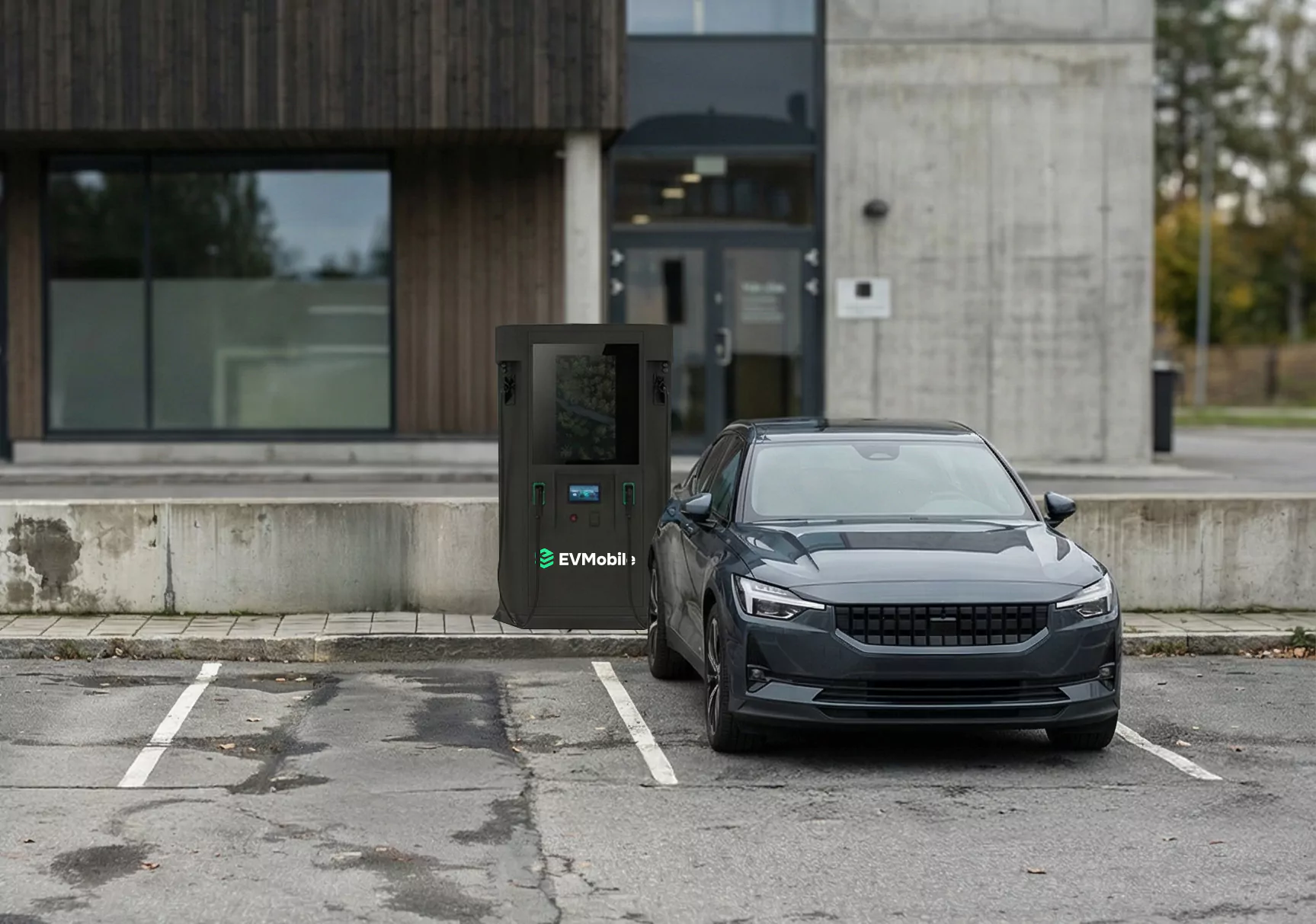
Effective fast charging supports a municipality’s vitality and accessibility. Charge points sit at transport hubs, in town centers and at visitor destinations, where their impact reaches further than charging alone. The same service serves the municipality’s own maintenance and service vehicles, residents and commuters, local businesses, and visitors and tourism. EV Mobile brings charging into use in a way that supports development, without infrastructure setting the pace.
For a municipality, charging is not only a technical question but an operational and financial responsibility. We deliver the solution as a service, with responsibility for uptime, monitoring and maintenance clearly defined.
The service model supports managed decision-making and reduces investment risk as charging demand develops.
Battery buffering lets a municipality start now and scale as demand develops, rather than wait for capacity that arrives after the targets are due.
Battery buffering lets a municipality start now and scale as demand develops, rather than wait for capacity that arrives after the targets are due.
Capacity does not have to be built to peak demand at the outset. It is sized against real use and expanded in stages, which keeps the decision reversible and the cost predictable.
The municipality procures a service, not equipment.